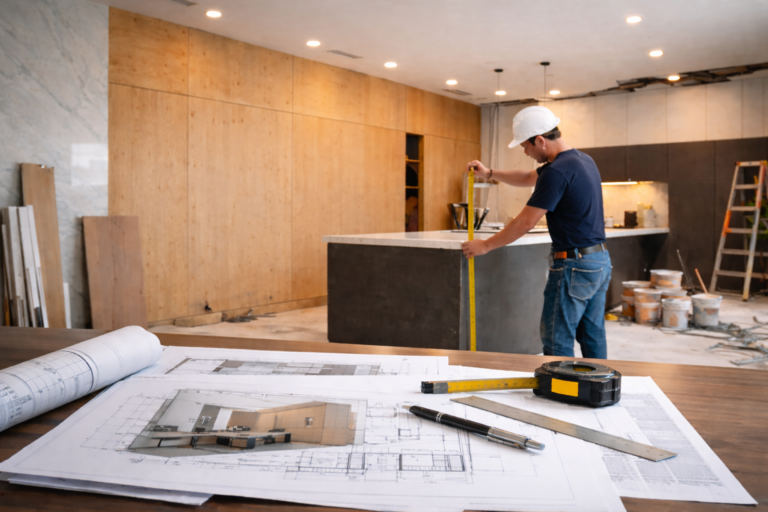
Bridging the Gap Between Design and Execution: Why Detailing Matters
Every architect knows that a drawing on paper and a finished space on site are two very different worlds. The design process captures vision, creativity, and functionality. But once the project moves from the studio to the construction site, the challenge truly begins. This is where detailing steps in as the bridge between design intent and reality. Without it, even the most inspiring concepts risk being diluted during execution.
In India, where every project involves multiple vendors, shifting timelines, and varied site conditions, the role of detailing becomes even more critical. A line in an architectural drawing can mean one thing in theory, but unless it is broken down into exact measurements, joinery details, and clear material specifications, the execution team is left to make assumptions. That’s when mistakes creep in — gaps in alignment, mismatched finishes, or compromises in quality that were never part of the design intent.
Good detailing is like a language that ensures everyone — architects, contractors, carpenters, and fabricators — is speaking the same dialect. It’s not about adding complexity; it’s about removing ambiguity. For example, the way a skirting meets a wall, how a veneer wraps around a column, or the joint between glass and wood may seem like small points, but these are the very details that determine whether a space feels seamless or clumsy.
Execution quality is often judged not by the big gestures but by the little ones. A flawless wardrobe shutter, a perfectly aligned ceiling panel, or a shadow gap that runs consistently across the room — these are the touches that elevate a design. And this precision comes only when detailing is thorough and execution teams treat those drawings as non-negotiable.
On the flip side, poor detailing (or worse, the absence of it) leaves too much room for improvisation on-site. Contractors may substitute materials, carpenters may alter joineries to save time, and suddenly the finished space looks very different from the architect’s vision. This not only compromises the design but also risks the architect’s reputation.
“Detailing is where design truly meets reality. In our experience, projects that invest time in clear detailing and coordination always achieve better outcomes. The difference between a good space and a great one often comes down to how seriously those details are treated.”
At the end of the day, clients rarely notice the hours spent on drawings or site coordination — but they do notice a smooth drawer, a clean finish, or a perfectly aligned partition. For architects, ensuring that execution teams respect detailing is not just about quality control; it’s about protecting the integrity of their design vision.