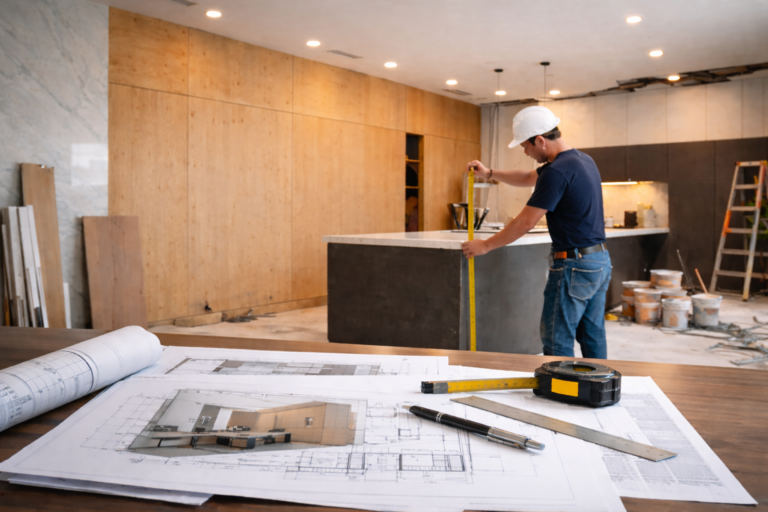
Why Material Selection Can Make or Break Your Interior Project
When most people think about interiors, their mind immediately jumps to the design — how the space will look, what colors to choose, where the furniture should go. But behind every stunning interior is a foundation of materials that quietly determine how long that beauty lasts. The truth is, even the most brilliant design can fall apart if the wrong materials are chosen.
Think of it like building a house on sand versus stone. A great design on paper is the sand. Strong, durable materials are the stone. Without the right stone, no matter how creative the architect’s vision or how perfect the drawings, the end result won’t stand the test of time.
In India, this becomes even more important because of our climate. Humidity, dust, heavy usage, and temperature changes can wear down materials faster than you expect. The wrong choice of plywood in a kitchen may lead to swelling within a year. A cheap laminate might fade quickly under sunlight. Poor-quality hardware could make drawers jam or hinges loosen. What looks like a small compromise at the time of execution can turn into a daily frustration for years.
On the other hand, the right material choices bring a design to life the way it was intended. High-quality boards and laminates ensure the furniture holds its form. Proper finishes maintain color and texture for years. Even invisible elements like adhesives, edge-banding, or hardware play a role in keeping everything intact. This is why architects spend time specifying materials so carefully — and why clients should never treat it as a secondary decision.
It’s not just about durability either. Material selection also influences comfort and well-being. Acoustic panels reduce noise in offices. Fire-rated boards improve safety. Natural veneers or stone add warmth that laminates can’t always replicate. Every material carries a certain performance value, and when combined thoughtfully, they create interiors that don’t just look good but work well.
Design shows the intent, but materials determine the reality. In our experience, projects succeed when clients and contractors respect material specifications and avoid shortcuts. A well-chosen material may cost a little more upfront, but it pays for itself in longevity, performance, and peace of mind.
So the next time you see a beautiful interior, remember: it’s not just the designer’s creativity that made it possible. It’s also the silent strength of the materials holding everything together.